
Health
Milwaukee woman charged in alleged $1 million Medicaid fraud
By Marcus Chen
Advertisement · Why this ad?
Katherine oversees editorial operations across all six brands. Before joining The Meridan Group, she spent 14 years at the Minneapolis Star Tribune, where she led the metro desk through its digital transformation. She holds a Master's in Journalism from Northwestern's Medill School.
More from Katherine →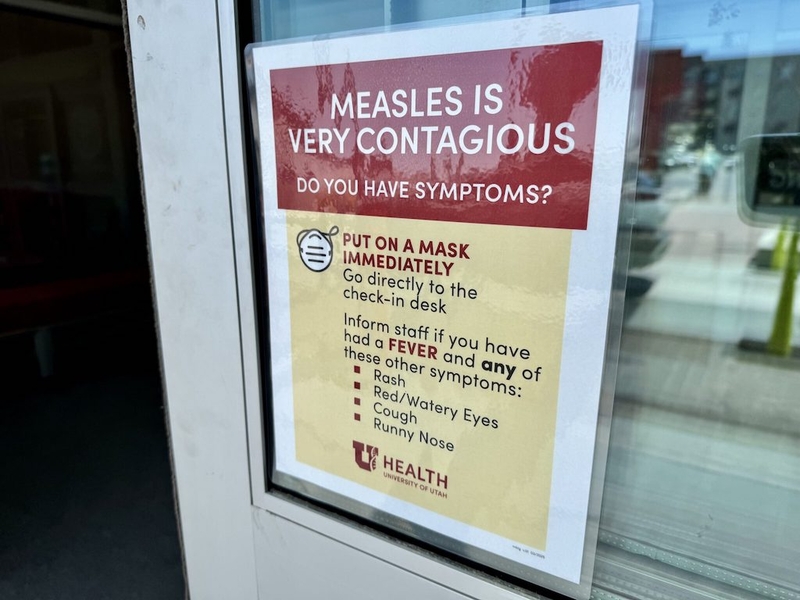
3:30 News Story A Wisconsin infant has died of measles — the first death from the viral illness since 1990, the state health department reported Thursday. The death comes as Wisconsin has experienced the largest number of measles cases in more than 35 years, Dr. Ryan Westergaard, chief medical officer for the Wisconsin Department of Health Services, told reporters at a media briefing Thursday afternoon. DHS officials have not released other information about the death, citing the privacy of the family involved. In 2026, nine people have been hospitalized with measles, and the state has recorded 431 measles cases in 13 counties. That is “almost certainly an underestimate,” Westergaard said. “Not everyone who becomes infected gets tested or comes to the attention of public health.” The cases reported in 2026 are more than 10 times the number reported in 2025. “Just last year, we reported 36 cases, and in the decade before that, most years we had either zero or one measles case per year,” Westergaard said. “Measles was once a common childhood infection in the United States,” he said. “What brought it under control was vaccination to the point that many physicians practicing today have never seen a case. That was an extraordinary public health achievement. But it wasn’t permanent and it wasn’t inevitable that we would have that success.” The MMR vaccine, which protects against mumps, measles and rubella, is the principal line of defense from the virus, but vaccination rates have been falling. “Two doses of the MMR vaccine are about 97% protective against measles,” Westergaard said. “This is a vaccine we’ve used for decades. We have extensive experience about its safety and its effectiveness.” For maximum effect, about 95% of the population needs to be vaccinated to prevent measles from spreading easily through a community. In Wisconsin, about 85% of kindergarten-age children are vaccinated, and nationally the rate is 92%. “And that’s really the central issue here,” Westergaard said. “Measles is now spreading because there are enough people who are susceptible to infection for the virus to continue finding new hosts.” Vaccination rates also vary widely across the state, falling well below the 85% average in some areas. “We have many pockets in communities throughout Wisconsin that have these lower levels, that we are concerned if measles is introduced, we could see community spread,” said Dr. Stephanie Schauer, the Wisconsin immunization program manager. “You have to really be aware of what are the rates at your school and in your community and in your county.” Westergaard said DHS is recommending that people get the MMR vaccine if they haven’t had it. Statewide, healthcare providers have given about 42,000 doses of the shot since August, he said. DHS also has issued new guidance recommending that infants who are 6 to 11 months old and who are considered at increased risk of exposure to measles get an early dose of the vaccine. Westergaard said DHS has sent healthcare providers a notice about the early shot and that providers can recommend it to those patients with infants whose risk level warrants it. Schauer said between 500 and 600 infants in Wisconsin have received the early shot in the last three months. Measles typically begins with a fever, cough, runny nose and red eyes, with its telltale symptom, a red rash over the body, showing up several days later. It is not simply a childhood illness, Westergaard said. It can cause pneumonia, inflammation of the brain, permanent disability and death. Measles is also extraordinarily contagious. The airborne virus can remain in a room for as long as two hours after an infected person leaves. When a person who’s not immune is exposed, “there’s a very high likelihood they’ll become infected,” Westergaard said. For that reason, “we need people to recognize measles infections when they do occur and do everything we can to avoid exposing others,” he said. Schauer said the state needs to ensure all children have access to vaccines, and that more can be done to make families aware of the Vaccines for Children program, which enables families with no insurance or inadequate insurance to get vaccines at no cost. Falling vaccination rates aren’t limited to the MMR vaccine. A report the Wisconsin Policy Forum released Thursday finds that the percentage of students in grades K-12 who have met all of Wisconsin’s minimum immunization requirements for schoolchildren is at a near-record low, 87.4% for the 2025-26 school year. That rate is up slightly from the previous year, but it’s still “much lower than the level that would provide population-wide protection against outbreaks of disease,” the report states. The report identifies several reasons for the declining rates. They include an increased number of shots added to the list of required vaccines, the “disruption and controversy” surrounding the COVID-19 pandemic and the subsequent vaccines for that illness, and an increase in the number of waivers from school vaccine requirements sought by families. The report suggests that public health officials work to target students behind schedule in their vaccines, reduce the number of “personal conviction waivers,” which parents can file if they are opposed to vaccination in order to exempt their children from school requirements, and rebuild trust with the public.
By Marcus Chen
By Marcus Chen
By Marcus Chen
By Katherine Langford